 Having a large inventory is one of an RV dealership’s biggest advantages. But there’s a hidden downside.
Sometimes, more choices make it harder for customers to choose.
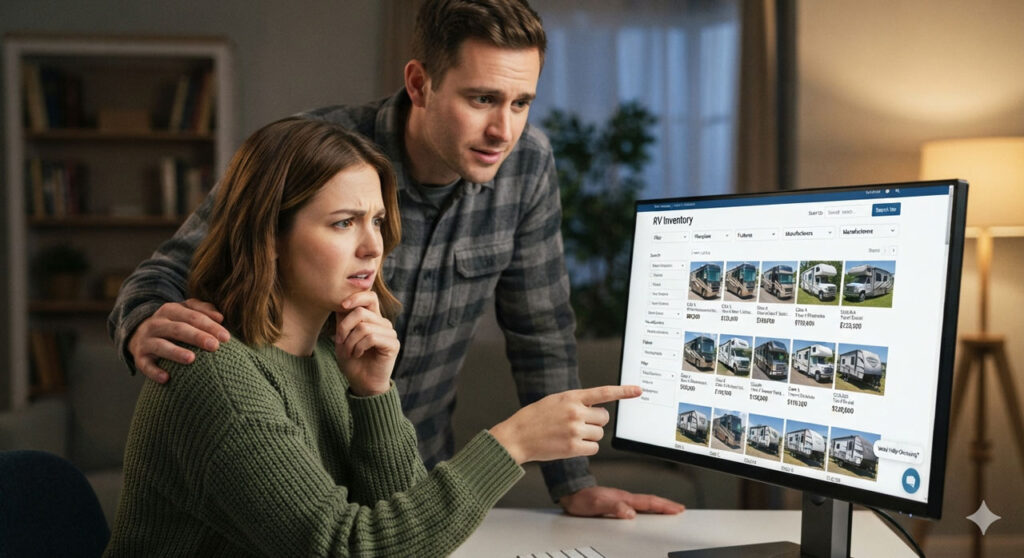
A shopper can visit an RV dealership website and find hundreds of models, dozens of floorplans, multiple manufacturers, and countless combinations of features and price points. Instead of feeling excited, they can become overwhelmed. And an overwhelmed shopper often does something no dealership wants: They leave.
That’s where RV Chat can make a difference.
The Problem Isn’t Always Finding an RV
RV shoppers usually don’t have trouble finding RVs online. They have trouble figuring out which RV is right for them. A customer may know they want to travel with their family but not know whether they need a travel trailer, fifth wheel, or motorhome. They may know their budget but not understand what type of RV fits within it. They may have a tow vehicle but aren’t sure which models make sense. The information is available. The challenge is making sense of it.
Questions Are Often More Valuable Than Clicks
Website analytics can tell you which RVs shoppers viewed. But a conversation can tell you why they viewed them.
For example, a shopper might ask:
- “We need something that sleeps six. What would you recommend?”
- “What’s the difference between these two floorplans?”
- “I have a half-ton truck. What should I be looking at?”
- “We’re planning to travel for several months. Which type of RV makes the most sense?”
Those aren’t casual browsing questions. They’re buying signals. RV Chat gives shoppers a simple way to ask them.
Turn a Huge Inventory Into a Guided Experience
A dealership doesn’t necessarily need to reduce its inventory to make shopping easier. It needs to make the inventory easier to navigate. That’s where human conversation becomes valuable. Instead of forcing customers to compare endless specifications on their own, RV Chat can help them identify what matters most.
The conversation can focus on things like:
- How many people will use the RV
- Where they plan to travel
- How often they’ll use it
- Their preferred features
- Their approximate budget
- Their towing situation
Once those priorities are understood, the shopper has a much clearer path forward.
The Goal Isn’t to Choose for the Customer
Good online engagement shouldn’t feel like someone is making the decision for the buyer. It’s about helping them make the decision themselves.
There’s a major difference between:
“Buy this RV.”
and:
“Based on what you’re looking for, here are a few types of RVs worth considering.”
The second approach feels helpful rather than pushy. That matters because RV purchases are personal. Customers want to feel confident that they’re choosing the right RV for their lifestyle—not simply being sold whatever happens to be available.
Less Confusion Can Mean More Appointments
Once shoppers understand their options, taking the next step becomes easier.
They may be ready to:
- View a specific RV
- Compare two models
- Visit the dealership
- Schedule an appointment
- Speak with a salesperson
- Request additional information
The conversation has accomplished something important: It has turned a complicated shopping experience into a manageable one.
Your Website Shouldn’t Leave Buyers Alone With 200 Choices
A massive inventory is impressive. But showing customers hundreds of options without guidance can create friction instead of excitement. RV Chat gives shoppers somewhere to turn when they aren’t sure what to look at next. That can be the difference between another anonymous website visit and a genuine sales opportunity.
Make It Easier to Find the Right RV
The best RV dealership websites don’t simply display inventory. They help customers navigate it. RV Chat adds the human connection that can turn uncertainty into confidence, questions into conversations, and conversations into appointments. Because sometimes the biggest obstacle between a shopper and an RV isn’t price. It’s simply not knowing where to start.